- Blog Details
What are some ways to relieve the pain from a wisdom tooth removal in Parramatta?
Wisdom tooth removal is a common dental procedure, but the recovery period can feel uncomfortable if you’re not prepared. If you’ve recently undergone wisdom tooth removal in Parramatta, or you’re planning for it, understanding how to manage pain effectively can make a big difference in your healing experience.
This guide’s written with honest patient concerns at the forefront simple, practical and rooted in what actually makes an actual difference in life.
Perceptions of Pain Following Wisdom Tooth Removal.
It’s normal to feel a little pain, swelling and mild discomfort after a wisdom tooth. This tends to crest within the first 24–72 hours and gradually improves over several days. Pain happens because:
- The gum tissue has been opened.
- There may have been damage to the bone along with the tooth.
- That area is healing and forming a blood clot.
The point isn’t to rid yourself of your pain entirely (which isn’t a realistic goal), but to treat it properly so healing can occur seamlessly.
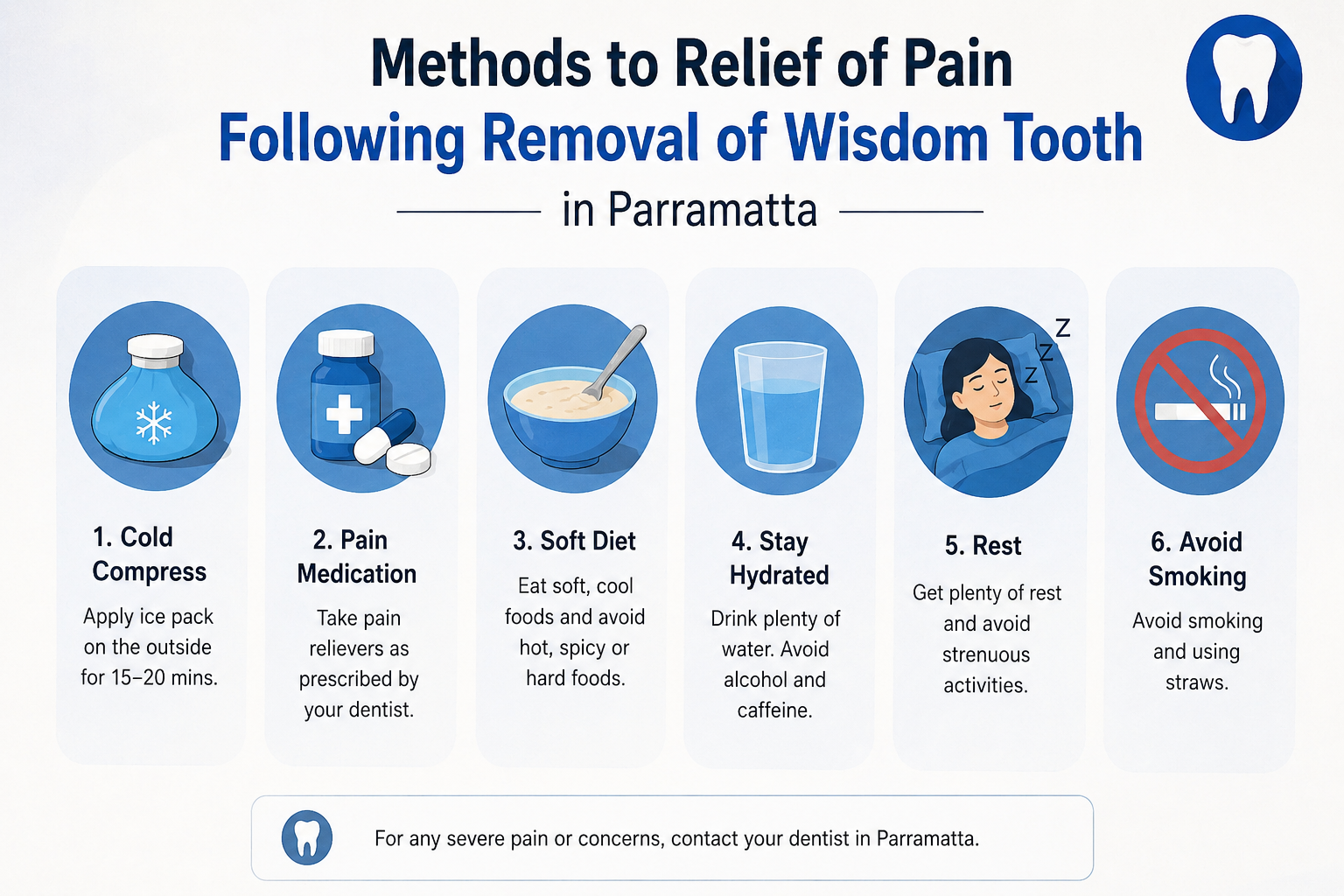
Methods to Relief of Pain Following Removal of Wisdom Tooth in Parramatta.
Watch Your Dentist closely to Follow His Instructions for Aftercare.
Your dentist gives aftercare instructions for a reason. And that specific guidance is for your particular case of wisdom tooth removal in Parramatta.
Common instructions include:
- Taking your prescribed medications according to time.
- Avoiding certain foods.
- Practices of oral hygiene while keeping the area clean without harming the area.
Neglecting to do this can slow healing and promote pain.
If neglected this may put the person at one end of healing delay and will increase pain.
Consumed Prescribed or Recommended Pain Relief Medication. The first line of defense for treating pain is typically pain-relief drugs. Your dentist may recommend:
For example
- over-the-counter options such as ibuprofen or paracetamol.
- Some of the stronger medications are prescribed to deal with more serious cases.
Take them as per instructions just right. Don’t wait until the pain is sufficiently serious before proceeding with your dose.
Slathering Ice Packs to Mitigate Swelling.
Swelling following a wisdom tooth removal is a common feeling of pain.
How to use ice packs:
- Apply on the outside of your cheek.
- Leave it on for 15–20 minutes.
- Repeat for a few hours in the first 24 hours.
Help to numb the area and help to reduce levels of inflammation naturally.
Stick to Soft Foods.
Your diet is a major contributor to pain management.
Eat foods like:
- Yogurt.
- Mashed potatoes.
- Smoothies (without a straw).
- Soup (lukewarm, not hot).
Avoid:
- Hard or crunchy foods.
- Spicy items.
- Very hot drinks.
Soft foods help shield the healing site and reduce irritation.
Be gentle; Keep the Area Clean The Place Clean.
Oral hygiene is important; however, it should be done with great care after losing a wisdom tooth in Parramatta.
Tips:
- Not brush on the mouth over extraction site the first day.
- Wash gently with warm salt water after 24 hours.
- Do not use heavy mouthwash, unless told to.
This prevents infection, something caused long-term pain and thereby prevents chronic pain of an increased magnitude.
Avoid Smoking and Alcohol.
Smoking and drinking can significantly slow down healing and increase pain.
Why to avoid them:
- Smoking can displace the blood clot (leading to a dry socket).
- Alcohol can block medications.
- Both can irritate the wound.
Even short-term avoidance can help recovery tremendously.
Look after your body and get rest and allow it to heal.
Your body needs time to recover.
What helps:
- Get enough sleep.
- Do not be physically active for a couple of days.
- Rest with your head slightly elevated.
Doing so too soon can cause swelling and discomfort.
Watch for Signs of Dry Socket.
Dry socket is one of the most painful complications after wisdom tooth removal.
Signs include:
- Severe pain after a few days.
- unpleasant taste or smell in the mouth.
- Visible empty socket.
Those symptoms that you see, call your dentist right away. If treated well, it can relieve pain quickly.
How long does pain remain after removing a Wisdom Tooth?
Pain will feel bad before it clears the site. For most patients at Parramatta:
- Mild discomfort: 3–5 days.
- A noticeable improvement: A week.
- Full healing: 2–3 weeks.
Pain is in the process of decreasing, not increasing. If it gets much worse, professional advice is often needed.
When Do You Call Your Dentist?
Some discomfort is totally healthy but some symptoms are definitely worth paying more attention to:
- pain that is severe or getting worse after 3 days.
- Excessive swelling.
- Fever.
- Persistent bleeding.
- Difficulty opening your mouth.
Whenever anything feels wrong, a reliable dental office offering wisdom tooth removal services in Parramatta can guide you throughout recovery.
Faster and more comfortable recovery: tips.
Some additional items which are useful to many patients are:
- Stay hydrated, but drink water (but no straws).
- Eat small, frequent meals.
- Maintain your mouth relaxed (don’t talk or chew so much).
- Use a clean pillowcase for a cleaner pillowcase to stop infection.
Little habits can help you feel better faster.
Why Proper Aftercare Matters
The pain that results from wisdom tooth removal in Parramatta is manageable if you follow the proper procedures. The majority of complications don’t do so on account of the procedure — but rather on account of bad aftercare. A well-educated patient heals more quickly, and experiences less physical pain and unnecessary visits to the dentist.
Conclusion.
Removing wisdom teeth doesn’t have to feel overwhelming in recovery. Most patients return to their usual daily activities on the receiving end of this care within several days. The key is simple:
Follow professional advice. Attention your oral care. Listen to your body. Whenever you might have a moment of doubt while recovering, the safest decision is always to get in touch with your dentist.
Frequently Asked Questions
Using ice packs, taking prescribed medications, and resting properly are the fastest ways to reduce pain in the first 24–48 hours.
Yes, mild to moderate pain is normal for up to 3–5 days. However, if the pain becomes severe or increases, consult your dentist.
Soft foods like yogurt, soup, mashed potatoes, and smoothies are best. They prevent irritation and support healing.
Yes, but avoid the extraction site for the first 24 hours. After that, brush gently and rinse with salt water.
Dry socket is the most painful condition and requires immediate dental attention.
Most people can return to light activities within 2–3 days, but full recovery may take up to 2 weeks depending on the case.
Related Post

Our Excellence and Awards!






Our Special Offer