- Blog Details
What Does a Dental Cavity Look Like? Signs, Stages and When to See a Dentist
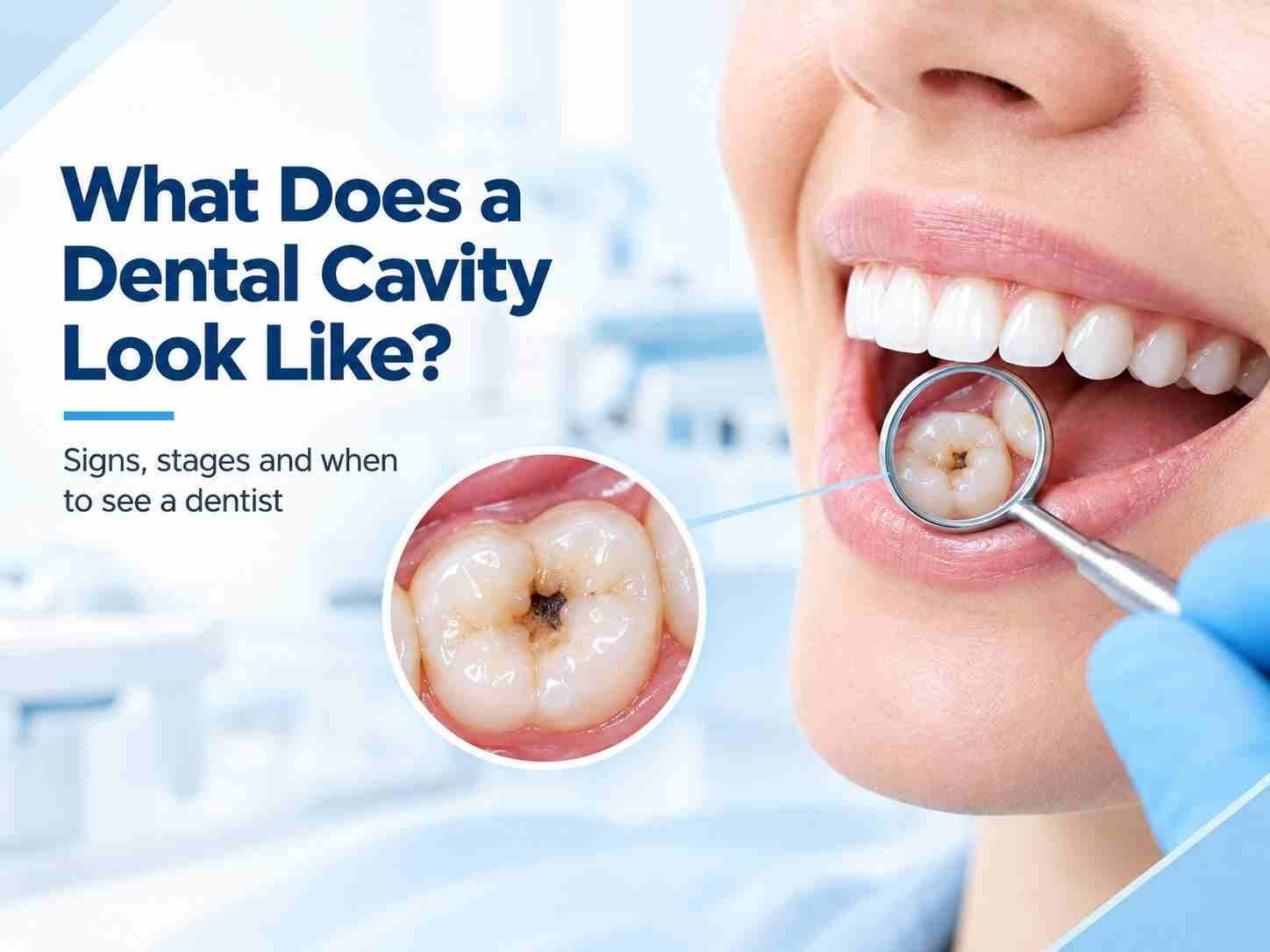
Have you ever noticed a small white spot, dark mark or unusual hole on one of your teeth? You might be wondering what does a dental cavity look like and how do you know if it’s tooth decay?
A cavity in the tooth isn’t always a hole. Early tooth decay may look like a chalky white patch or small discoloured spot; as it progresses brown or black spots, pits and holes appear. Some cavities are not visible without dental examination (e.g. between teeth or grooves of back molars).
Knowing what might be signs of a cavity can help you know when to go to the dentist.
What does a dental cavity look like in the early stages?
Early tooth decay isn’t easy to see so it’s easy to brush over when you’re brushing or check your teeth in the mirror.
Common early signs include:
- Chalky white spots: These may be mineral loss from tooth enamel (hard outer layer that protects your teeth).
- White lines near gumline: Early decay (dentin) can look like dull pale marks close to where the teeth meet gums.
- Small brown spots: Some areas of decay will turn yellow or brown as the tooth structure changes.
- Change in tooth texture: An area may lose its smooth glossy surface.
At this stage you may not feel any pain or sensitivity. Some early enamel changes can be controlled by professional preventive care, fluoride and better oral hygiene but a dentist needs to assess the area affected by decay or another type of mark.
What Does an Advanced Dental Cavity Look Like?
As tooth decay increases the appearance of the affected tooth may become more obvious.
1. Brown or Black Spots
A cavity can be brown, dark brown or black on the tooth — chewing surfaces of molars; near gumline; between teeth. Not every dark spot is a cavity — some discolouration could be staining or other dental problems so colour alone cannot prove tooth decay.
2. A Small Hole or Pit
A cavity that is visible looks like a small hole or pit in the tooth. Decay breaks down enamel and starts to break down the structure of the tooth as well. The opening may not be visible (back of a tooth or inside deep groove).
3. A larger or deeper cavity
Decay can get bigger and reach deeper layers of the tooth so the hole is larger than before; the tooth looks damaged, uneven or discoloured where the hole is; food gets caught again in the same place when you eat or chewing hurts; deep decay causes a lot of sensitivity/toothache.
Can You Have A Dental Cavity Without Seeing It?
Yes. A dental cavity can form even if your tooth looks normal from outside. Decay can form between teeth, underneath an existing filling or grooves of back molar etc. These aren’t always easy to see at home so dentist will look at your teeth and maybe suggest dental X-rays (if needed) to find decay that cannot be seen during routine visual examination.
Regular check-ups are useful because early tooth decay doesn’t always cause symptoms.
What Are The Symptoms Of A Dental Cavity
Appearance isn’t the only symptom of tooth decay. Others could include:
- Tooth sensitivity to hot or cold food & drinks
- Discomfort when eating sweet foods
- Pain when biting or chewing
- Persistent toothache
- Food repeatedly getting caught in a particular area
- Swelling or redness around the tooth in some cases
Not everyone has these symptoms especially at the early stages. If pain persists; facial swelling; worsening discomfort, book a dental assessment straight away. Facial swelling that makes breathing or swallowing difficult needs emergency medical care.
How Can You Tell the Difference Between a Cavity and a Tooth Stain?
Stain changes colour of surface of tooth whereas decay damages structure but they can look very similar:
What you see | What it could be |
Brown mark on tooth | Surface staining or possible decay |
Chalky white patch | Early enamel mineral loss |
Visible pit/hole | Possible established cavity |
Dark marks inside deep molar grooves | Staining or possible decay |
Sensitivity with visible mark | Decay or another dental problem |
This comparison is not a diagnosis. Don’t scrape or probe a suspected cavity yourself. Only a dental examination will tell you what caused it and whether treatment is needed.
What Should I Do If You Think You Have a Cavity?
If you find a suspicious mark, hole or recurring sensitivity book an appointment with your dentist rather than wait for pain to set in. Treatment depends on how far decay has progressed — early changes can be treated with preventive care; formed cavities need filling, more advanced damage may need additional treatment as well.
To help protect your teeth:
- Brush twice a day with fluoride toothpaste (clean between your teeth every day too).
- Don’t have sugary snacks and drinks often.
- Go to the dentist for dental check ups when recommended (usually every six months).
Need a Dental Cavity Check in Parramatta?
If you have noticed a white spot, dark mark hole or unexplained tooth sensitivity an examination by a dental professional will help to see whether there is any tooth decay present and what treatment may be required.
Call us to book an appointment for a dental check up. As your trusted dentist in Parramatta we will explain the dental problems you have, assess your oral health and discuss treatment options that will protect your natural teeth.
Related Post
Our Excellence and Awards!






Our Special Offer