- Blog Details
Braces vs Aligners: Which Orthodontic Treatment Is Right for You?
If you’re thinking about getting orthodontic treatment the first thing you probably ask is braces vs aligners — which one actually works for your teeth, lifestyle and budget? They both straighten teeth and correct bite problems but they work differently, look different and suit different situations.
There is no one answer that fits all. What you choose will depend on your particular dental alignment, how complex your case is (or isn’t), what you do in everyday life and personal preferences around appearance vs comfort. This guide explains how braces vs aligners compare so you can have a more informed conversation with your dentist before making your choice.
What Are Braces?
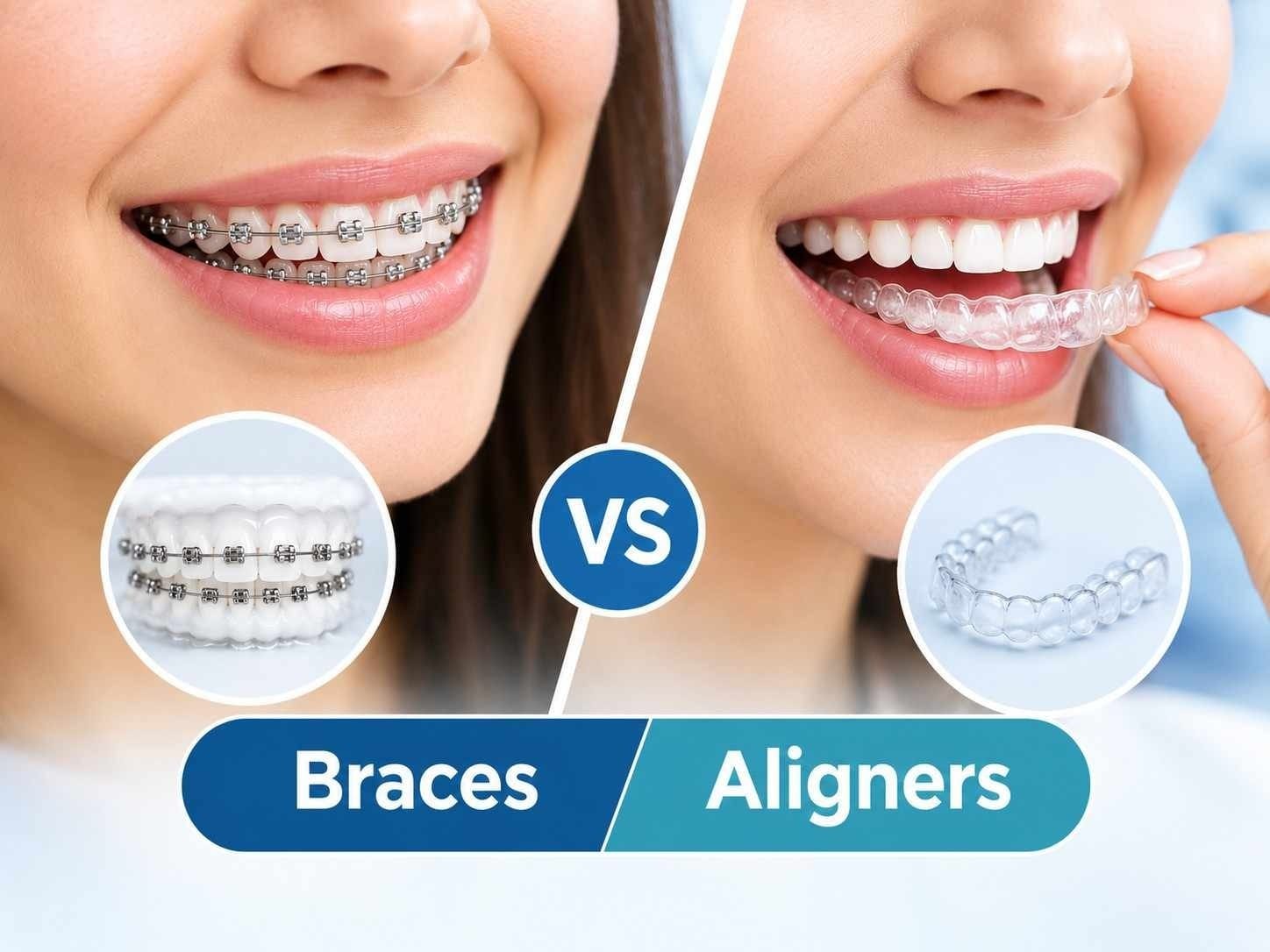
Braces are a fixed orthodontic appliance (brackets, wires and bands) attached to teeth. They apply constant controlled pressure so teeth move into place over time.
Braces come in a few different forms:
- Metal braces – the traditional option, generally the most affordable fixed-brace choice.
- Ceramic braces – tooth-coloured or clear brackets that are less visible than metal.
- Lingual braces – attached to the back of the teeth, making them virtually invisible from the front.
Since braces are fixed in place they work continuously (no need to remove them) so can be used for more complex alignment problems.
What Are Clear Aligners?
Clear aligners are custom made trays that slowly move teeth into position. One set of aligners is worn for a period of time then on to the next (small adjustments are built in to each tray).
Unlike braces, aligners can be taken out for eating, brushing and flossing so patients find this more convenient day to day but they have to be worn for a certain number of hours each day in order to stay on track so consistency is important.
Braces vs Aligners: Key Differences
1. Appearance
Metal braces are the most visible option, ceramic and lingual braces reduce visibility even more. Clear aligners are usually least visible because trays are transparent and fit closely over teeth (that’s why many adults go for aligners).
2. Comfort
Braces can be painful from brackets and wires (especially after adjustments). Aligners are smoother against gums and cheeks but there will be some pressure or tightness when new trays are introduced.
3. Removability
This is one of the biggest practical differences in braces vs aligners decision making. Braces are on your teeth all treatment time, aligners can be taken out (which makes eating and cleaning easier but means results depend on wearing them as instructed).
4. Treatment Time
Treatment time depends on case not appliance type alone — orthodontic treatment can take several months to a few years depending on complexity and how consistently aligners are worn (if that’s the option chosen).
5. Complex Cases
Braces are usually used for more complex cases (crowding, severe bite misalignment or jaw positioning problems). Aligners work well for mild to moderate alignment issues but newer aligner systems can treat a wider range of cases than in the past.
6. Oral Hygiene and Maintenance
Brushing around brackets and wires is harder (interdental brushes or floss threaders needed) and since aligners are removable brushing/flossing stays closer to normal routine — but trays need cleaning too (to prevent buildup).
7. Cost
It’s not true that one option is cheaper than the other — cost depends on complexity of treatment, appliance used and length of time (not which option is cheaper). Ask for a personalised quote not just advertised prices as check-ups, retainers and adjustments can be different between plans too.
Who Should Consider Braces?
Braces might be right for you if:
- You have a more complex bite or alignment problem.
- You want a treatment that doesn’t require daily self-discipline to remove and reinsert an appliance.
- Your dentist has recommended fixed continuous pressure for your case.
- You’re OK with a more visible (or ceramic/lingual) appliance during treatment.
Who Should Consider Aligners?
Aligners might be better for you if:
- Your alignment issue is mild to moderate.
- You want a less visible treatment option.
- You’re OK with a consistent daily wear schedule.
- You’d prefer to take your appliance out when eating, sports or special occasions.
Braces vs Aligners for Teens and Adults
Age isn’t what makes the decision (dental history, bite complexity, personal responsibility with wear time etc.)
For teens braces are often chosen because they are consistent (no need to remember to wear and store removable trays correctly) but for adults aligners are often preferred because of their discreet appearance (especially in professional or client facing jobs).
But many adults with more complex cases still respond better to braces so it comes down to what your teeth and bite actually need.
Common Myths About Braces and Aligners
“Aligners always take longer than braces.”Not necessarily. Time to treatment depends on the case, not the appliance type.
“Braces only for kids and teenagers”. Adult orthodontic treatment is becoming more common and braces work as well for adults as younger patients.
“Aligners fix everything”. Aligners work great for most cases but more complex bite or jaw issues may still respond better to braces.
“Whichever one’s cheaper is best”. Cost should be one factor among several — suitability for alignment issues matters more than price alone.
How to Decide Between Braces and Aligners
The most reliable way to choose between braces and aligners is an orthodontic assessment by a professional orthodontist.
During this evaluation your dentist will look at your bite, alignment and dental history and talk about:
- What type and complexity of your alignment problem is expected
- Treatment time for each option
- Daily habits (e.g., sports, work environment) that might affect treatment
- Maintenance requirements for whichever option you choose
- Total cost and what’s included in your treatment plan
Because every mouth is different the “better” option really is the one that fits your bite, lifestyle and goals — not some rule that applies to everyone.
Frequently Asked Questions About Braces vs Aligners
Neither is universally better – it depends on case complexity, lifestyle, appearance preferences and daily maintenance preferences too.
Aligners can be very effective for mild to moderate cases but often better suited to more complex cases (crowding/bite misalignment).
Not always. Treatment time is more related to complexity of case and consistency of wear than appliance type.
Yes. Both are used for adult orthodontic treatment so the right choice depends on your particular dental needs.
No. Yes, a dentist may suggest switching approaches if the case turns out to be more complicated than expected (this will vary by individual treatment plan).
Book Your Dental Assessment
If you are still deciding braces vs aligners then the next best step is a proper dental assessment not guessing price or appearance. As a trusted dentist in Parramatta we can assess your bite and alignment and help choose what actually fits with your smile and lifestyle. Call us today to book an appointment.
Related Post

Our Excellence and Awards!






Our Special Offer